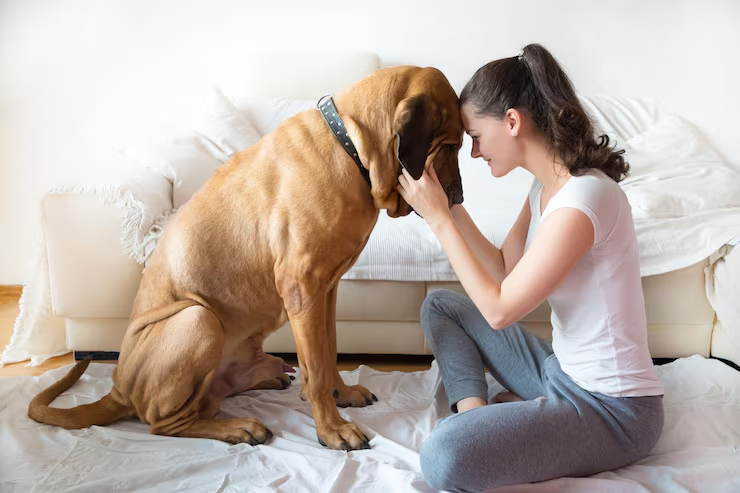
Does your dog destroy your doormat, do you receive a note from your neighbor saying that your pet keeps on barking all the time, or is he behaving as if you were away for too long? This means that your pet does not have any bad behavior in this situation. It means that your pet finds it hard to deal with the separation. One of the most frequent issues among pet owners, canine separation anxiety may be misunderstood by many people.
Let us try to understand the problem in more detail and see how you can help your pet.
Symptoms of Separation Anxiety in a Dog
It’s not just a pitiful whining on the threshold. There are a lot of behaviors indicating the development of separation anxiety, including:
- Continuous vocalization in the form of barking, howling, and whining once you leave.
- Destructive chewing, especially around door frames and windows.
- House training accidents because of mastering toilet training before.
- Pacing, salivating, and panting for no reason related to the temperature outside.
- Attempts to escape the crate, confined space, or even the house itself.
- Following your movements around the house and the yard before you leave.
If the behaviors listed above appear only during the period of your absence and disappear completely as soon as you come back, the chances are really high that the cause is separation anxiety and not insubordination.
Reasons Behind the Development of Separation Anxiety
- Life changes: moving to a new place, getting used to your work schedule change, or any changes in the household.
- No practice of being alone: mostly for puppies who rarely had an opportunity to be alone.
- Traumatic experience or abandon in the past: mostly for rescue dogs.
- Innately anxious behavior: there are breeds that tend to have an attached nature.
- Sudden changes in routine: your coming back to office after staying home for quite a long time.
How You Can Help Your Dog Deal with Separation Anxiety
- Habituation to short periods of being left alone: start from a few minutes and gradually increase the time spent alone by your dog.
- Not creating too much fuss on arrival and departure: it will help the dog feel those moments as ordinary for them.
- Creating a safe den: create your dog’s sleeping place with your old clothes and favorite chew toys.
- Mental stimulation: provide your dog with various puzzle feeders and other toys.
- Routine establishment: the time for feeding and walks should be consistent each day.
- No punishment for anxious actions: all the mess and damage caused by the anxiety is done unintentionally and makes everything even worse.
If It Is Getting Out of Hand
In case of a very high level of self-destruction, constant panic, or anxiety attacks which are unmanageable by slow teaching, the visiting of the veterinarian or the professional in dog behavior becomes absolutely reasonable. In the case of the most serious anxiety problems in dogs, the veterinarian can prescribe anti-anxiety medicine. It would be very useful for the animal during the time when he or she learns how to cope with new things.
Conclusion
It is a wrong thought that the dog is overreacting, because it is the real feeling of anxiety, but with the patience in the process of training and some additional assistance, your pet will get used to living without you.
The information presented above is given in a general character. In case of severe anxiety, the visit of the veterinarian or professional in dog behavior becomes necessary.