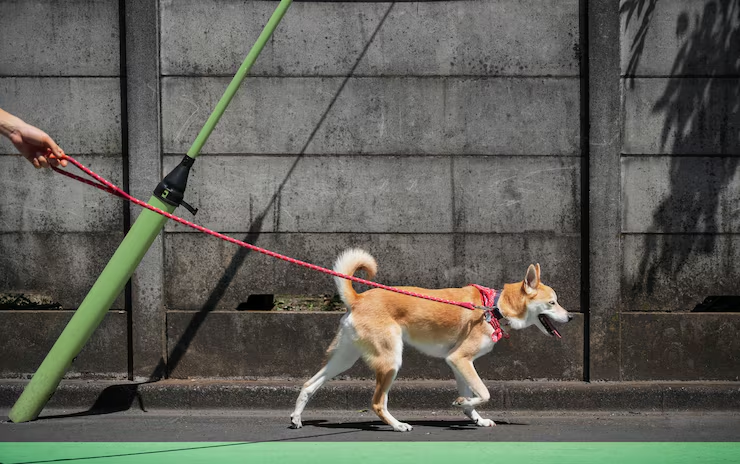
Going for a walk with your dog might have originally been a very relaxing activity for you. However, nowadays it is becoming more and more like wrestling with a resistant opponent. And you aren’t alone in this, because leash pulling is among the most common dog training issues. The worst part is that pulling tends to get worse before getting better – unless you find out the root cause of it.
Dogs’ Reasons for Pulling on the Leash
The answer to the posed question is quite simple. Your dog is naturally faster than you, and moving slowly does not come naturally for them. Any of the following reasons can turn into an almost automatic pulling response.
- Too much excitement or energy especially at the beginning of a walk;
- Something exciting that catches their attention and makes them move forward;
- Reactivity to other dogs, people or noises;
- Lack of leash training, especially in puppies and recently adopted dogs;
- Pulling reinforcement, i.e. past experience of pulling as it worked in helping them move quicker to where they needed to be.
Why Is Punishment Not So Good for Leash Pulling
Tightening the leash or shouting “No” at your dog can help you stop leash pulling right there, but this method cannot teach your dog what you want from them. In addition, in the case of reactive dogs, punishments could exacerbate their stress and reactivity to certain stimuli like other dogs.
Simple and Efficient Approaches for Tackling Leash Pulling
- Just stop walking when your dog starts pulling. Standing still removes the reward (your moving forward) until the leash goes loose.
- Give lots of rewards to the moments of loose-leash walking.
- Train in a low distraction environment first, like your backyard or a less busy street.
- Use appropriate equipment. A front-clip harness may decrease pulling a lot, comparing to the regular collar, especially for strong dogs.
- Make your training sessions short and regular. 5-10 minutes of concentrated training is often more effective than a long and frustrating walk.
- Move in another direction instead of always standing still to make training more interesting and increase your dog’s awareness of you.
What to Do When Your Dog Pulls Due to Reactivity
In case your dog reacts to other dogs, people, specific objects or noises and pulls towards or away from the trigger, this type of pulling is called reactivity. Thus, increasing the distance between your dog and the trigger and rewarding calm behavior next to it can work better than leash mechanics.
When To Call For Some Professional Help
In case pulling is accompanied with lunging, barking or you find it really hard to keep your dog under control close to the trigger, a professional dog trainer can help you to structure your training. There is nothing to be ashamed about as leash manners are a skill and some dogs just need more guidance in it.
Conclusion
Loose leash walking isn’t something that your dog is instinctively going to know how to do. It’s a technique that must be taught. Thankfully, all dogs can learn to take a nice relaxed stroll next to you with the proper training and practice.
It should be mentioned that this article is not something more than just a guideline. In case your dog displays any aggression toward the leash, you should better consult a professional.