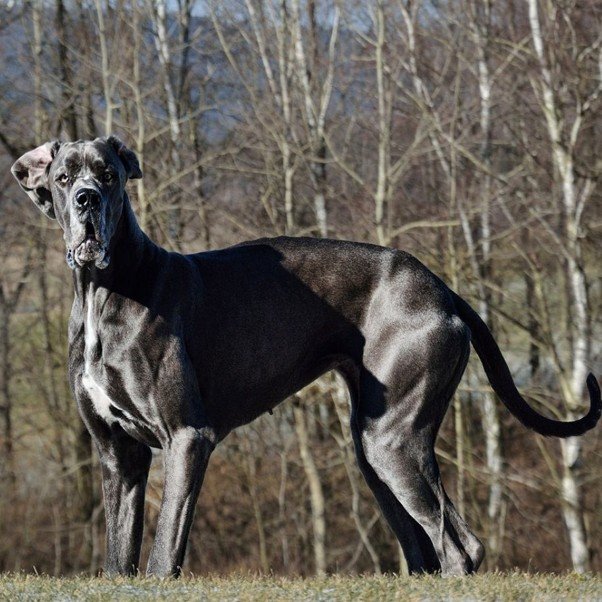
It is well known that one of the largest dog breeds that exists is the Great Dane. It stands out not only by its impressive size but also because of the unique soft character of this breed, which makes it a “gentle giant”. This article provides an overview of the Great Dane dog breed.
Origin
German is considered the homeland of the Great Dane. It was bred from a mixture of mastiff and greyhound dogs that were used for hunting wild boar and then became domesticated and became a pet.
Physical Characteristics
- Height: 28-32 inches (71-81 cm)
- Weight: 50-90 kg
- Colors: fawn, brindle, blue, black, harlequin, and mantle
- Coat: short, smooth, low-maintenance
Life Expectancy
Typically, the life expectancy of this breed is 7-10 years. It is a rather short-lived breed that is inherent for most giant dogs.
Temperament and Character
Though these dogs are very large, they are quite calm, loving and gentle dogs, and they can be called “lap dogs” since they do not realize how large they actually are. These dogs are generally well-disposed towards other animals and people
Living Conditions
Large-sized dogs require a lot of space, so this breed is recommended for houses and for yards instead of apartments. The large size of these dogs requires special attention when dealing with stairs and furniture.
Diet and Food
A breed-specific food is a must. The feeding of this type of dogs should be done carefully due to the risk of bloating.
Grooming Requirements
The short hair of the Great Dane requires minimal grooming procedures.
Conclusion
The Great Dane dog breed is an example of a gentle giant. To make a pet comfortable and to provide it with a long life, it is necessary to take care of its diet and joints. For details on training, read the puppy training guide.
Great Danes are predisposed to bloat and problems with joints – ask your veterinarian about correct feeding habits.