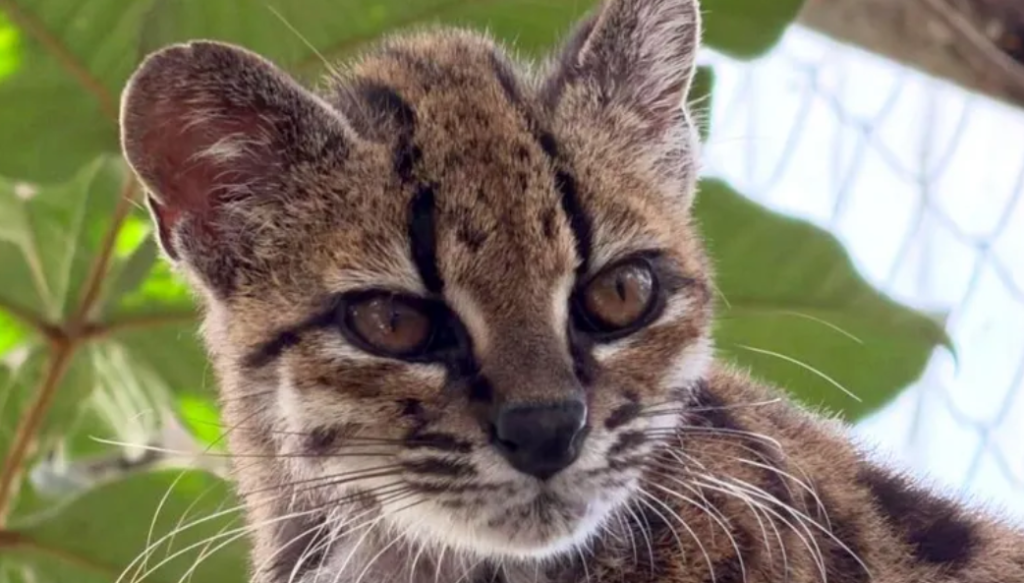
If you thought every cat species on Earth had already been found and catalogued, think again. Researchers have confirmed a completely new wild cat species from the forests of Bolivia — and it’s been hiding in plain sight for years.
Meet the tigrino, scientifically named Leopardus tilcayo. It’s roughly the size of a domestic cat but sports a spotted, leopard-like coat that helped it blend in with its wild cousins for far too long.
How a “House Cat” Turned Out to Be a New Species
The story starts with a single 10-year-old cat living in a rescue sanctuary in Bolivia. A local resident had originally found the animal in the forest and assumed it was an ordinary kitten. But as it grew, its behavior made it clear this was no typical house cat.
Bolivian researcher Paola Nogales-Ascarrunz, who was volunteering at the sanctuary, noticed the cat — nicknamed “Tigrino” — looked unusual compared to typical domestic breeds. That observation kicked off a full genetic investigation involving scientists from around the world.
Using DNA from living animals and museum specimens, the team confirmed that Tigrino belonged to an entirely distinct species, not just an unusual-looking version of an existing one.
Why Tiger Cats Are So Easy to Miss
Tiger cats are a group of small, spotted wild cats found across Central and South America, from Costa Rica down to Argentina. They’re notoriously difficult to tell apart — even for experts — because of how similar their coat patterns look.
That resemblance is exactly why the tigrino stayed under the radar for so long. With very few museum specimens and almost no photographic records, there was simply nothing for scientists to compare it against.
The new research, published in the journal Current Biology, didn’t just uncover one new species — it suggests tiger cats may actually split into five species instead of three, reshaping how we understand this entire group of small wild cats.
What This Means for the World’s Cat Family
Every cat, from your pet tabby to a wild tiger, belongs to the biological family Felidae. Until now, science recognized 41 official cat species. With the tigrino’s confirmation — and the likelihood of more tiger cat species being formally split out — that number could climb to 44 or 45.
It’s a reminder that even animals roughly the size of a domestic cat can go completely undiscovered, not because they’re hiding in some remote, unreachable corner of the planet, but simply because nobody had the right data to look closely enough.
Why This Discovery Matters for Conservation
Tiger cats as a group are already considered vulnerable due to deforestation, habitat loss, and illegal hunting. But here’s the catch: you can’t protect a species if you don’t officially know it exists.
That’s the real significance of this discovery. Identifying the tigrino as its own species means conservationists can now start tracking, studying, and protecting it specifically — rather than lumping it in with cats it merely resembles.
Researchers currently know of only one confirmed living tigrino, but they believe more exist in Bolivia’s dense Yungas forest region, an area still largely unexplored by scientists.
The Bigger Picture for Animal Lovers
For those of us who love cats — wild or domestic — this discovery is a great reminder of how much we still don’t know about the animal kingdom. If you enjoy learning about different cat breeds and their fascinating traits, stories like this show that the feline family tree is far more complex (and mysterious) than most people realize.
Want to read more fascinating animal discoveries and cat care tips? Check out our cat care guides and pet lifestyle blog for more.