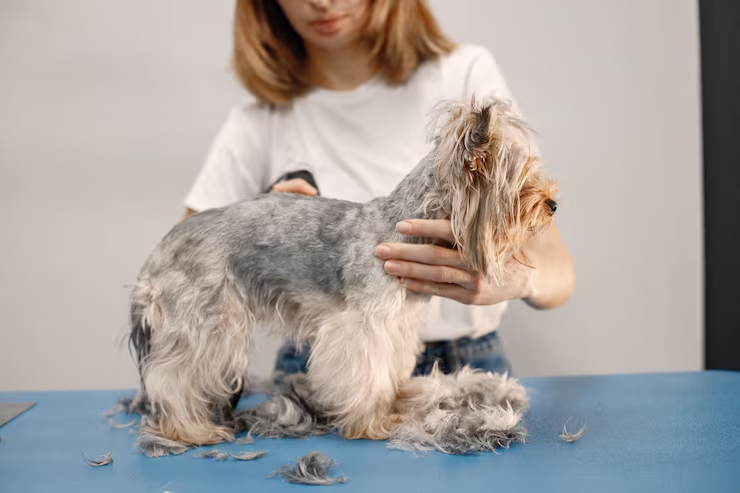
Shedding vs. Hair Loss
Normal shedding is a natural, ongoing part of a dog’s coat cycle and shouldn’t be confused with alopecia (hair loss), which refers to unusual thinning, bald patches, or excessive loss beyond a dog’s typical shedding pattern.
Common Causes of Hair Loss in Dogs
- Fleas and parasites — flea bite dermatitis is a common trigger, causing itching, scratching, and hair breakage
- Allergies — food or environmental allergies often lead to hair loss around the paws, face, and belly
- Hormonal conditions — issues like hypothyroidism or Cushing’s disease can cause gradual, symmetrical thinning
- Ringworm — a fungal infection that typically causes circular patches of hair loss, usually without itching
- Friction or pressure — ill-fitting collars or repeated lying on hard surfaces can cause localized hair loss
- Genetics — some breeds are naturally prone to thinning coats or are genetically hairless
What the Experts Say
According to the American Kennel Club, identifying the underlying cause is essential, since treatment for a flea allergy looks very different from treatment for a hormonal imbalance. Any unusual or spreading hair loss deserves a proper diagnosis rather than guesswork.
When to See a Vet
Book a visit if hair loss is sudden, spreading, paired with itching or redness, or if your dog seems otherwise unwell. Our guide to dog skin allergies and flea allergy dermatitis covers the allergy-driven causes in more depth, and regular coat checks as part of an at-home grooming routine make it easier to catch changes early.
For more on everyday health monitoring, browse our vet-reviewed dog health section and our list of common dog health issues.
This article is for general information only and isn’t a substitute for advice from your veterinarian, especially if hair loss is sudden, spreading, or paired with other symptoms.


