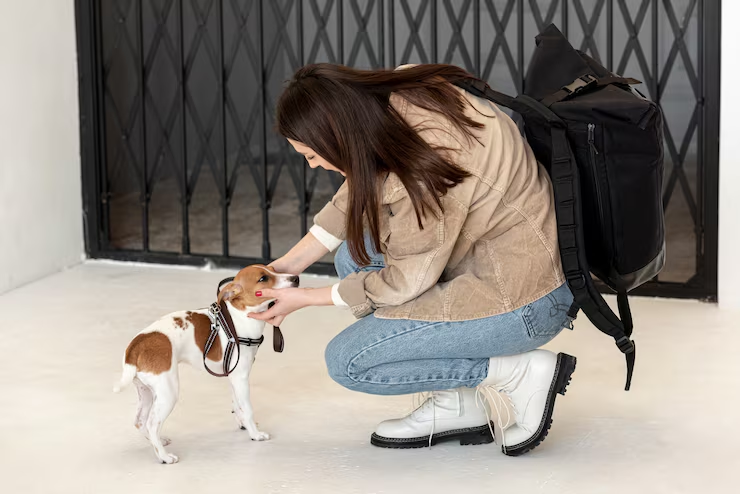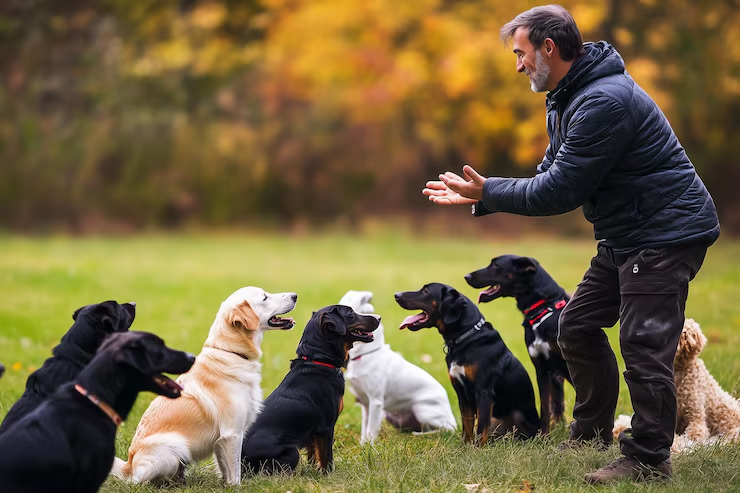
If your dog walks seem more like a battle than a fun trip, leash training for dogs is the solution you need. Leash training for dogs isn’t all about teaching obedience but showing your pet how to relax and calmly move along the street to reach their goal faster. This article will tell you how to train your pet.
Reasons Why Dogs Pull on the Leash
To know what steps to take with leash training for dogs, you should learn the causes of pulling:
- Too excited about smells, views, or other pets
- Not enough practice of walking on the loose leash
- Habit because pulling has already worked for the pet to get somewhere faster
- The abundance of unused energy before the walk
Steps in Training Your Dog
These are the steps of leash training for dogs that will be most effective:
- Training should start from indoors or yard. It means that your dog needs to learn how to walk without distractions first.
- Stop walking technique – if the pet starts to pull, you need to stop walking until the leash is not tight anymore.
- Reward the right behavior – praise your pet if it walks calmly by your side.
- Correct the mistakes by changing the direction of walking.
- Practice often – leash training for dogs works better if you take walks more frequently but shorter.
- Increase the difficulty of training step-by-step. When the pet manages to walk in the quiet area, it needs to learn to move in the presence of other pets, people, and noisy streets.
Equipment That Helps with Leash Training for Dogs
It’s better to use specific equipment during leash training for dogs:
- A front-clip harness which doesn’t choke and reduces pulling power
- Standard leash of 6 feet gives more control than the retractable one
- Treat pouch which helps reward good behavior easily while walking
How Much Time Is Needed for Leash Training for Dogs?
A few weeks is usually enough to see the changes after leash training for dogs. However, the older or higher-energy dog will need more time to cope with pulling problems.
Mistakes That Make the Training Process Longer
The following things can negatively affect the process of leash training for dogs:
- Allowing the pet to pull “just this time”
- Taking the dog by the leash suddenly which can scare or make it pull harder
- Different rules in the family
- Moving forward and skipping the basic steps
Leash Training for Dogs: Summary
It’s worth noting that leash training for dogs takes some time and patience. With the proper approach, it will become much easier to train the dog to walk on the leash. Be calm and don’t rush. You can find more tips on the official website of the American Kennel Club.
Every pet learns differently – if the problem persists despite the regular training sessions, you should turn to a professional trainer.