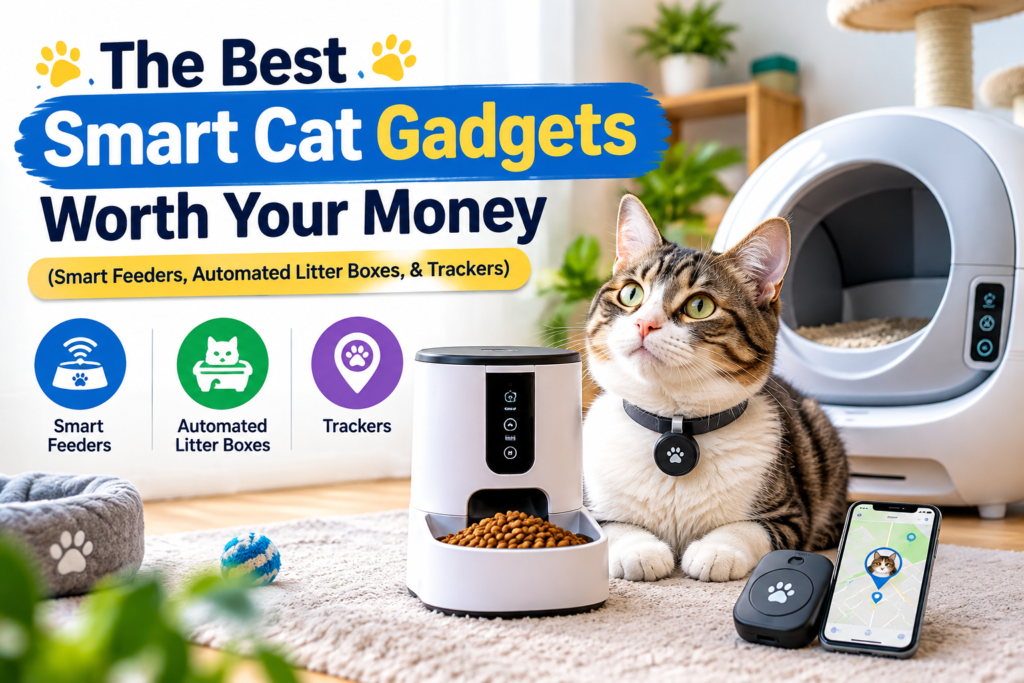
If you’re serious about modern cat care, technology has made it easier than ever to keep your feline healthy, safe, and happy — even when you’re not home. From smart feeders that stop overeating to litter boxes that flag early health problems, today’s pet tech does far more than just look cool on Instagram.
In this guide, we’re breaking down the smart gadgets that actually deliver on their promises, so you know exactly what’s worth adding to your cat care routine.
Why Smart Cat Gadgets Matter for Modern Pet Owners
American pet owners are busier than ever, and cats are notoriously good at hiding illness until it becomes serious. Smart devices close that gap by giving you real, ongoing data about your cat’s eating, bathroom, and activity habits — data your vet will actually thank you for bringing to an appointment.
Smart Feeders: Solving Overfeeding and Multi-Cat Chaos
One of the most common cat care mistakes is overfeeding, especially in multi-cat households where one confident cat eats another’s portion.
Microchip Feeders
Microchip-enabled feeders read your cat’s existing microchip (or a special RFID collar tag) and only open for the assigned cat. This is a game-changer if you have a cat on a prescription diet or a cat who needs to lose weight while a housemate doesn’t.
Scheduled Feeders
Scheduled feeders release pre-portioned meals at set times throughout the day. Benefits include:
- Consistent portion control, which prevents obesity
- Reduced begging behavior since meals arrive on a predictable schedule
- The ability to feed your cat on time even when you’re traveling or working late
Persian Cat Tip: Persian cats are prone to weight gain due to lower activity levels, so a scheduled or microchip feeder can be especially useful for keeping portions consistent and preventing sneaky snacking.
Health-Monitoring Litter Boxes: Catching Problems Early
Litter box habits are one of the earliest warning signs of feline illness — and one of the easiest things to miss with the naked eye.
Smart litter boxes use weight sensors and usage tracking to monitor:
- Frequency of visits (a sudden increase can signal a urinary tract infection)
- Time spent in the box (straining can indicate a blockage or kidney issue)
- Weight changes over time, which help flag unexplained weight loss or gain
Because cats are experts at masking pain, this kind of passive monitoring can catch kidney disease or UTIs weeks before symptoms become obvious, potentially saving you an expensive emergency vet visit.
Persian Cat Tip: Persian cats are genetically predisposed to polycystic kidney disease (PKD), which makes litter box monitoring an especially valuable part of their cat care plan. Catching subtle changes in urination habits early can make a real difference in long-term kidney health.
GPS & Activity Trackers: Know Where and How Active Your Cat Is
Whether your cat is strictly indoor or has some outdoor access, activity and GPS trackers give you visibility you simply can’t get otherwise.
These lightweight collar devices typically offer:
- Real-time GPS location, useful for outdoor or indoor-outdoor cats
- Daily activity summaries comparing movement to breed and age norms
- Sleep tracking, which can reveal early signs of pain or discomfort
- Geofencing alerts if your cat wanders outside a set safe zone
For indoor cats, activity data helps you spot a drop in movement that might otherwise go unnoticed — often one of the first signs something is wrong.
Are Smart Cat Gadgets Worth the Investment?
For most households, yes. The upfront cost of a smart feeder or litter box is usually far less than a single emergency vet visit, and the early-warning data can genuinely extend your cat’s life through earlier intervention. Start with one device that solves your specific pain point — whether that’s overfeeding, litter box mysteries, or activity monitoring — rather than buying everything at once.
Frequently Asked Questions
Do smart feeders work for multi-cat households?
Yes, microchip and RFID-based feeders are specifically designed to solve the problem of one cat eating another’s food, making them ideal for multi-cat homes.
Are health-monitoring litter boxes accurate?
Most modern models use precise weight sensors and app-based tracking, offering good accuracy for spotting trends over time, though they should complement — not replace — regular vet checkups.
Is a GPS tracker necessary for an indoor-only cat?
Not for location tracking, but the activity and sleep monitoring features are still valuable for spotting subtle health changes in indoor cats.
Part of our ongoing cat care series at Daily Paws. Looking for breed-specific advice? Check out our dedicated guides on Persian cat health and grooming.